Breaking News
Loading...

Random News

  • New Movies
  • Recent Games
  • Tech Review

Tab 1 Top Area

Tech News

Game Reviews

Recent Post

Showing posts with label Animals. Show all posts
Thursday, 31 October 2013
Bullmastiff

Bullmastiff

Bullmastiff: The bullmastiff is a large breed of domestic dog. It has a solid build and a short muzzle. The bullmastiff shares the characteristics of Molosser dogs, and was originally developed by 19th-century gamekeepers to guard estates. The breed's bloodlines are drawn from the English Mastiff and Old English Bulldog. It was recognized as a purebred dog by the English Kennel Club in 1924. They are a very quiet dog; they very rarely bark. Males should be 25 to 28 inches (64 to 71 cm) tall (AKC Std.) at the withers and 110 to 130 pounds (50 to 59 kg). Females should be 24 to 26 inches (61 to 66 cm) at the withers, and 100 to 120 pounds (45 to 54 kg). Exceeding these dimensions is discouraged by breeders.

 Bullmastiff
 Bullmastiff
 Bullmastiff
Bullmastiff
Wednesday, 30 October 2013
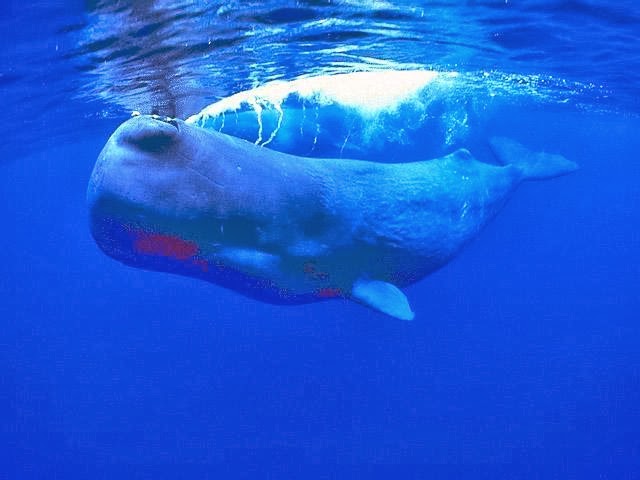
Sperm Whale

Sperm Whale

Sperm Whale: (Physeter macrocephalus), or cachalot, is the largest of the toothed whales. It is the only living member of genus Physeter, and one of three extant species in the sperm whale family, along with the pygmy sperm whale and dwarf sperm whale of the genus Kogia. Mature males average at 16 metres (52 ft) in length but some may reach 20.5 metres (67 ft), with the head representing up to one-third of the animal's length. The sperm whale feeds primarily on giant and colossal squid. Plunging to 3 kilometres (9,800 ft) for prey, it is the deepest diving mammal.

 Sperm Whale
 Sperm Whale
 Sperm Whale
Sperm Whale
Saturday, 26 October 2013
Red Panda

Red Panda

Red Panda: The red panda (Ailurus fulgens), also called lesser panda and red cat-bear, is a small arboreal mammal native to the eastern Himalayas and southwestern China that has been classified as Vulnerable by IUCN as its wild population is estimated at less than 10,000 mature individuals. The population continues to decline and is threatened by habitat loss and fragmentation, poaching, and inbreeding depression, although red pandas are protected by national laws in their range countries. The red panda is slightly larger than a domestic cat. It has reddish-brown fur, a long, shaggy tail, and a waddling gait due to its shorter front legs.

 Red Panda
 Red Panda
 Red Panda
Red Panda
Wolf

Wolf

Wolf: The gray wolf or grey wolf (Canis lupus) is a canid native to the wilderness and remote areas of North America, Eurasia, and North Africa. It is the largest member of its family, with males averaging 43-45 kg (95-99 lb), and females 36-38.5 kg (79-84.9 lb). It is similar in general appearance and proportions to a German shepherd, or sled dog, but has a larger head, narrower chest, longer legs, straighter tail and bigger paws. Its winter fur is long and bushy, and predominantly a mottled gray in colour, although nearly pure white, red, or brown to black also occur.

 Gray Wolf
 Gray Wolf
 Gray Wolf
 Gray Wolf
Wednesday, 25 July 2012
Wolverine

Wolverine

Wolverine: The wolverine, also referred to as glutton, carcajou, skunk bear, or quickhatch, is the largest land-dwelling species of the family Mustelidae (weasels). It is a stocky and muscular carnivore, more closely resembling a small bear than other mustelids. The wolverine has a reputation for ferocity and strength out of proportion to its size, with the documented ability to kill prey many times its size.

 Wolverine
 Wolverine
 Wolverine
Wolverine
Wildebeest

Wildebeest

Wildebeest: The wildebeest (plural wildebeest or wildebeests), also called the gnu is an antelope of the genus Connochaetes. It is a hooved (ungulate) mammal. Wildebeest is Dutch for "wild beast" or "wild cattle" in Afrikaans (beest = cattle), while Connochaetes derives from the Greek words konnos ("beard") and khaite ("flowing hair"). The name "gnu" originates from the Khoikhoi name for these animals, "gnou".

 Wildebeest
 Wildebeest
 Wildebeest
 Wildebeest
Thursday, 19 July 2012
Babirusa

Babirusa

 Babirusa: Found in Wallacea, or specifically the Indonesian islands of Sulawesi, Togian, Sula and Buru. All members of this genus were considered part of a single species until 2002, the babirusa, B. babyrussa, but following the split into several species, this scientific name is restricted to the Buru babirusa from Buru and Sula, whereas the best-known species, the north Sulawesi babirusa, is named B. celebensis.

  Babirusa
  Babirusa
  Babirusa
 Babirusa
Friday, 6 July 2012
Woolly Mammoth

Woolly Mammoth

Woolly Mammoth: The woolly mammoth (Mammuthus primigenius), also called the tundra mammoth, was a species of mammoth. This animal is known from bones and frozen carcasses from northern North America and northern Eurasia with the best preserved carcasses in Siberia. They are perhaps the most well known species of mammoth. This mammoth species was first recorded in (possibly 150,000 years old) deposits of the second last glaciation in Eurasia.

 Woolly Mammoth
 Woolly Mammoth
 Woolly Mammoth
Woolly Mammoth
Woolly Monkey

Woolly Monkey

Woolly Monkey: The woolly monkeys are the genus Lagothrix of New World monkeys, usually placed in the family Atelidae. The four species of woolly monkey all originate from the rainforests of South America. They have prehensile tails and live in relatively large social groups. One species of woolly monkey, the yellow-tailed woolly monkey, has recently been placed in the genus Oreonax.

 Woolly Monkey
 Woolly Monkey
 Woolly Monkey
 Woolly Monkey
Tuesday, 26 June 2012
Kowari

Kowari

Kowari: also known as the Brush-tailed Marsupial Rat, Kayer Rat, Byrne's Crest-tailed Marsupial Rat, Bushy-tailed Marsupial Rat and Kawiri, is a small carnivorous marsupial native to the dry grasslands and deserts of central Australia. It is monotypical of its genus. The Kowari is a ground dwelling carnivorous marsupial, living either in its own dug burrow or in the hole of another mammal. The Kowari is a solitary animal and marks its territory with secreations from a scent gland and leaving scats.

 Kowari
 Kowari
 Kowari
Kowari
Wednesday, 23 May 2012
Aye Aye

Aye Aye

The aye-aye (Daubentonia madagascariensis) is a lemur, a strepsirrhine primate native to Madagascar that combines rodent-like teeth and a special thin middle finger to fill the same ecological niche as a woodpecker. It is the world's largest nocturnal[4] primate, and is characterized by its unusual method of finding food; it taps on trees to find grubs, then gnaws holes in the wood using its forward slanting incisors to create a small hole in which it inserts its narrow middle finger to pull the grubs out. The only other animal species known to find food in this way is the striped possum.

Aye Aye
 Aye Aye
 Aye Aye
 Aye Aye
Wednesday, 16 May 2012
Wombat

Wombat

Wombats, Australian marsupials, are short-legged, muscular quadrupeds, approximately 1 metre (39 in) in length with a short, stubby tail. They are adaptable in habitat tolerance, and are found in forested, mountainous, and heathland areas of south-eastern Australia, including Tasmania, as well as an isolated patch of about 300 ha in Epping Forest National Park in central Queensland. Wombats dig extensive burrow systems with rodent-like front teeth and powerful claws. The dental formula of wombats is Upper: 1.0.1.4, lower: 1.0.1.4 Wombats' fur colour can vary from a sandy colour to brown, or from grey to black. All three known extant species of wombats average around 1 m (40 in) in length and weigh between 20 and 35 kg (44 and 77 lb).

Wombat
Wombat
Wombat
Wombat
Quokka

Quokka

Quokka (Setonix brachyurus), the only member of the genus Setonix, is a small macropod about the size of a domestic cat. Like other marsupials in the macropod family (such as the kangaroos and wallabies), the quokka is herbivorous and mainly nocturnal. It can be found on some smaller islands off the coast of Western Australia, in particular on Rottnest Island just off Perth and Bald Island near Albany. A small mainland colony exists in the protected area of Two Peoples Bay, where they co-exist with Gilbert's potoroo. In the wild, its roaming is restricted to a very small range in the South-West of Western Australia, with a number of small scattered populations on the mainland, one large population on Rottnest Island and a smaller population on Bald Island near Albany. The islands are free of foxes and cats.

Quokka
Quokka
Quokka
Quokka
Copyright © 2012 Wild Life Planet All Right Reserved
Designed by CBTblogger